The Whole-Brain Child
The Whole-Brain Child blends cutting-edge brain science with simple, everyday parenting strategies. It helps parents understand how a child’s brain develops, why behavior sometimes feels overwhelming, and most importantly, how to respond in ways that build emotional intelligence and resilience.
What is happening in the child’s brain?
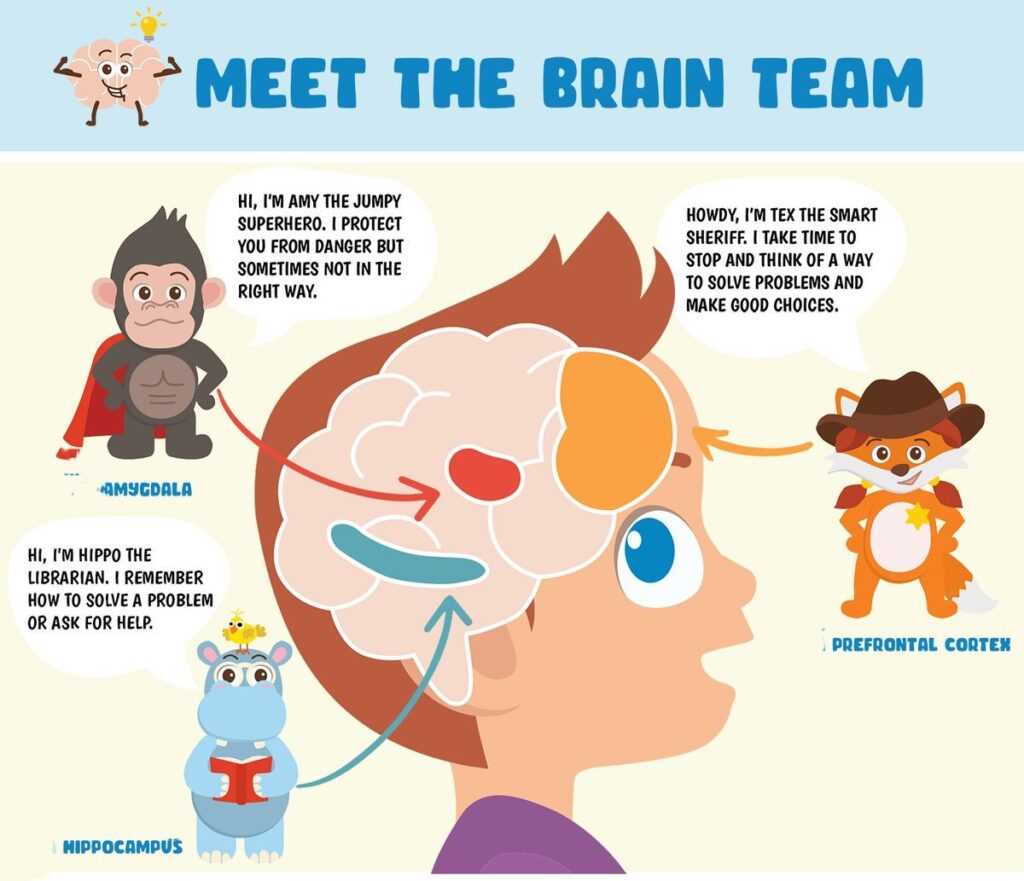
Amygdala (Emotional Brain)
- Acts like an alarm system.
- Detects danger, stress or big emotions.
- Triggers reactions like crying, shouting or shutting down.
Middle Prefrontal Cortex (Thinking Brain)
- Helps with decision-making, planning and self- control.
- Understands rigth from wrong.
- Calms emotions and thinks logically.
What can parents do in that Moment
The core aim isn’t discipline through rules — it’s integration. Integration means helping a child’s emotional, logical, and social parts of the brain work together smoothly. When these parts are connected, children can regulate their feelings, solve problems, and build strong relationships
12 Key Strategies
🌟 1. Connect and Redirect First connect emotionally, then help the child think logically. This means sitting with their feelings before guiding behavior
🌟 2. Name It to Tame It Encourage your child to name their feelings. Saying “I’m angry” activates the logical brain and helps calm the emotional storm.
🌟 3. Engage, Don’t Enrage Instead of power struggles, involve their thinking brain gently — for example, by asking questions instead of giving orders.
🌟 4. Move It or Lose It Physical movement can help shift a big emotion. A walk, dance, or stretch can reset a child’s brain state.
🌟 5. Let the Clouds of Emotion Roll By Help children understand that emotions are temporary — like clouds passing in the sky.
🌟 6. SIFT Guide your child to notice Sensations, Images, Feelings, and Thoughts — a simple way to boost self-awareness and emotional flexibility.
🌟 7. Use It or Lose It Exercise the “upstairs brain” (thinking brain).Ask questions, encourage problem-solving
🌟 8. Use the Remote of the Mind Help children replay events in their mind. Build awareness and control over thoughts
🌟 9. Remember to Remember Help them process and store memories. Talk through experiences
🌟 10. Exercise Mindsight Build self-awareness + empathy. Help them understand themselves and others.
🌟 11. Increase the Family “We” Create a sense of belonging. Use “we”, shared experiences, family connection
🌟 12. Connect Through Conflict Use conflict as a chance to teach. Repair, reconnect, and build relationship