PARADIGM
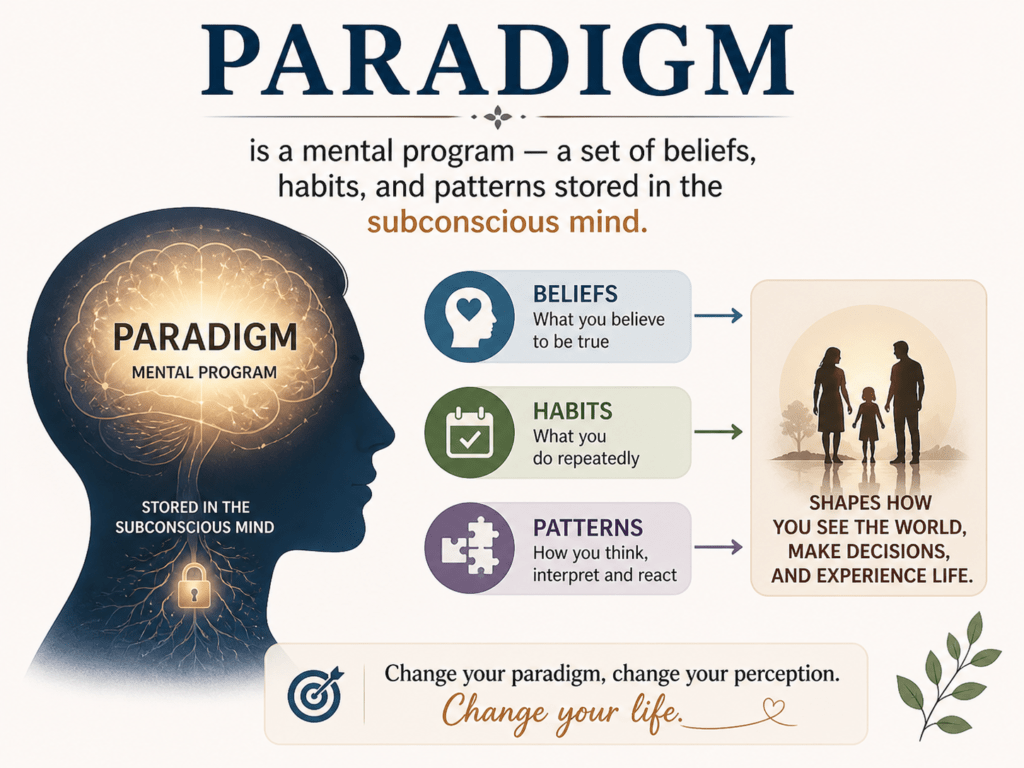
What is a Paradigm?
A paradigm is a mental program — a set of beliefs, habits, and patterns stored in the subconscious mind that control how we:
- See the world
- Interpret situations
- React to people
- Make decisions
Most of these patterns are not consciously chosen.
They are formed through:
- Childhood experiences
- Conditioning from parents and society
- Repetition over time
A paradigm is the “lens” through which you see life
Why Paradigms Matter
We often believe we are reacting to reality.
But in truth:
We are reacting to our perception of reality. And that perception is shaped by our paradigm.
This means:
- Two parents can face the same child behavior
- But respond in completely different ways
Not because of the child…
but because of their internal programming.
What is a Paradigm Shift?
A paradigm shift is a fundamental change in the way you:
- Think
- Interpret situations
- Respond to life
It is not just learning something new. It is seeing the same situation differently
| Old Pattern | Event → Automatic reaction → Same result |
| New Pattern (After Shift) | Event → Awareness → Conscious choice → New result |
How Paradigms Are Formed
Paradigms are built through repetition and emotional impact.
For example:
- A child repeatedly hears “You don’t listen”
→ Grows up believing “I am not good enough”
→ Becomes reactive or defensive as a parent
Over time, these patterns become automatic behaviors.
The Paradigm Loop
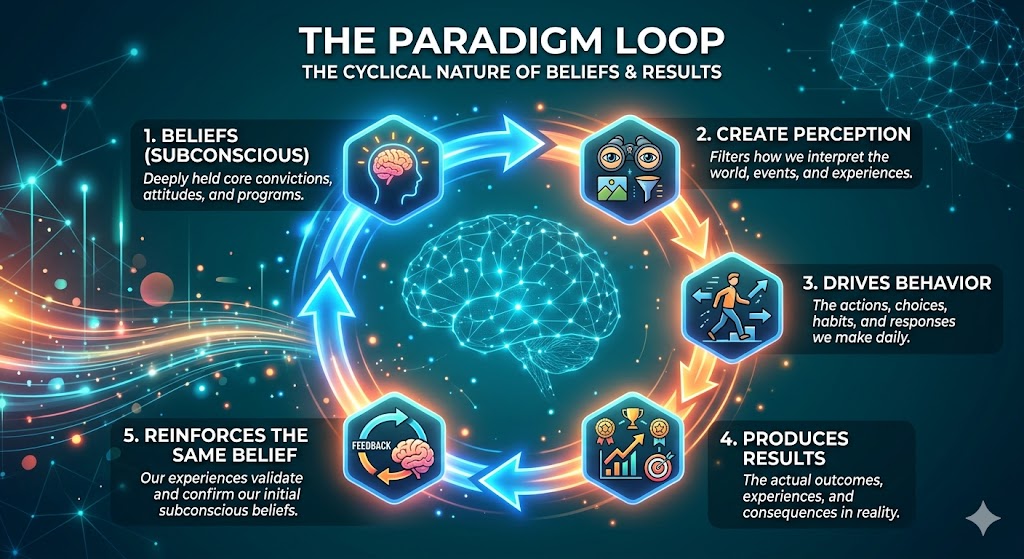
This loop continues unless it is consciously interrupted.
The Role of Awareness (Breaking the Loop)
The first step to a paradigm shift is awareness. You begin to notice:
- This is just my interpretation.
- This reaction is coming from my conditioning.
This creates a gap between stimulus and response. That gap is where change becomes possible.
The Role of Choice
Once aware, you gain the ability to choose:
- Instead of reacting from habit
- You respond from intention
This is where:
- Parenting becomes conscious
- Communication becomes calmer
- Relationships begin to transform
Paradigm Shift in Parenting
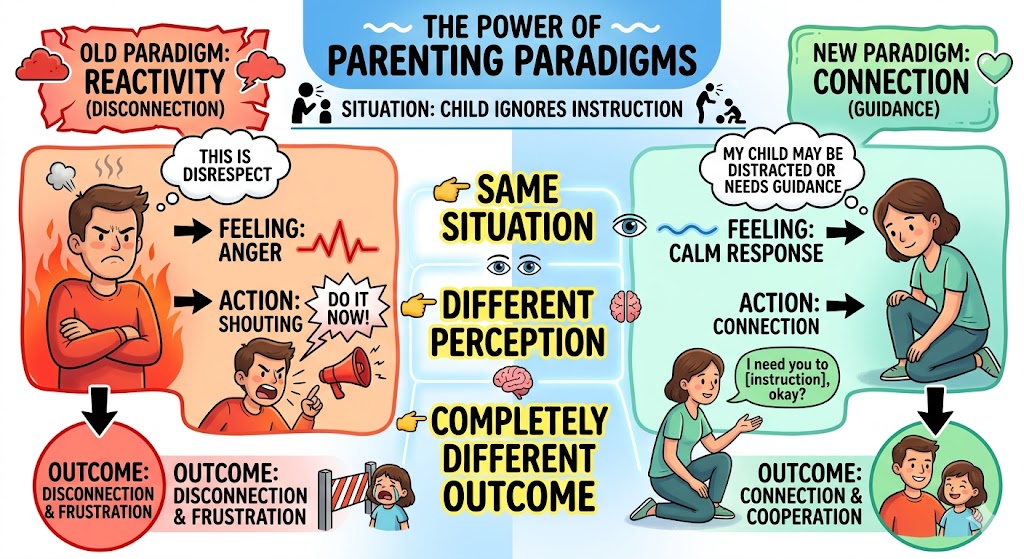
When you shift how you see your child, you change how they experience you.