GRATITUDE
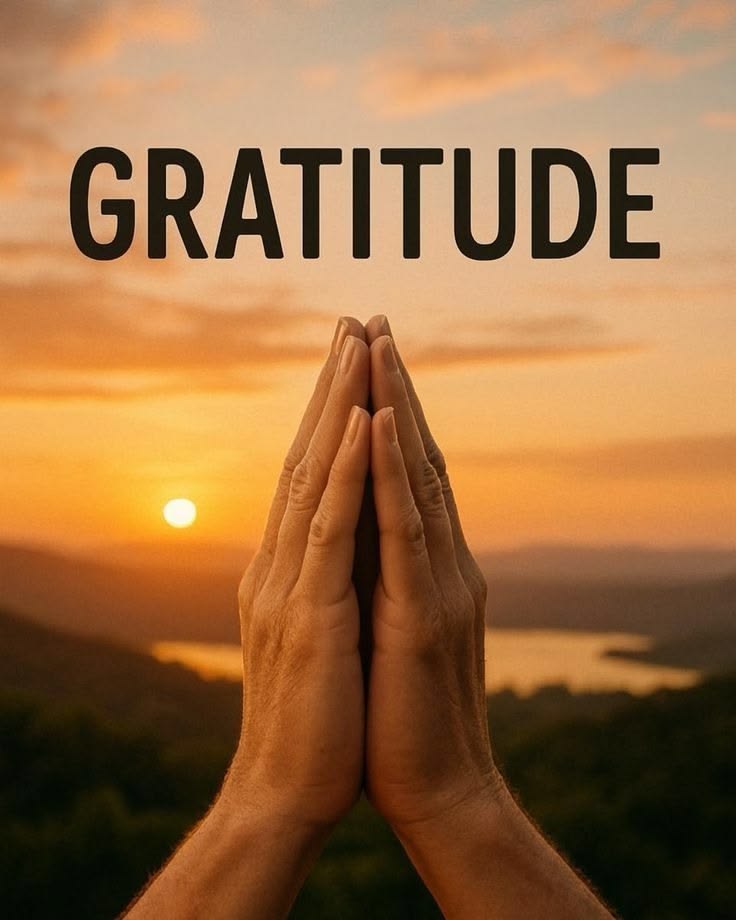
Stop. Look. Go : is a simple and powerful daily gratitude practice that will lead you to experience increased presence, a more expansive perspective, and a great sense of possibility in your daily life. Created by Br.David Steindl- Rast

In daily life we often move quickly from one task to another. “STOP” invites us to take a small pause in the middle of our day. Stopping helps create space in our awareness. It allows to step out of automatic reactions and become more present.

Looking helps us recognize the gifts already present in everyday life. When we truly notice these moments, gratitude naturally begins to arise.

The final step is to move forward with gratitude, letting gratitude shape the way we live and respond to the world.
The Science of Gratitude
Research shows that practicing gratitude regularly can improve happiness, strengthen relationships and support better physical and emotional health. Gratitude hepls shift our focus away from negative thoughts and towards the positive aspects of our lives.
Studies also suggest that when we feel grateful, the brain releases chemicals linked to well-being and connection. Over time, simple practices like noting a few things we appreciate each day can help train the mind to notice more positive moments in everyday life.
Practicing Gratitude as a Family
- Gratitude Jar
- Write down things you are thankful for on slips of paper and put them in a jar. At the end of the week read them together.
- Gratitude Walks
- Take a walk and point out things in nature, your neighborhood or your family life that you appreciate.
- Family Gratitude Rituals
- Share something you are grateful for at the dinner table.
- Bedtime Thank – Yous
- Before bed, have each family member share one thing they were grateful for that day.
- Thank- You Notes
- Encourage your child to write or draw thank-you notes for teachers, friends and relatives.
Tips For Making Gratitude Effective
- Be Specific and detailed
- Eg.” I am grateful for the way my friend made me laugh during lunch” rather than I am grateful for my friends.
- Feel the Emotion (Sincerity)
- Don’t just list what you are grateful for – pause and genuinely feel the appreciation.
- Make it a Consistent Daily Habit
- Make gratitude a daily habit by writing down three to five things you appreciate at a regular time each day.
- Focus on People and Experiences
- Expressing gratitude to people who impact your life helps build stronger, healthier relationships.
- Use a Gratitude Journal or Jar
- Keep a gratitude journal or jar of thankful notes to revisit whenever you need a lift.
- Practice Public Gratitude
- Take a moment to thank someone personally and specifically to nurture connection and positivity.
- Visualize the Absence
- Consider what life would be like without something you value to strengthen your sense of gratitude.
- Look for Positivity in Negativity
- In challenging times, gratitude for small lessons or growth can strengthen resilience.
- Savor Daily Moments
- Slow down and notice simple sensory details that bring you into the present moment.
A Gentle Step Inward Creates a Powerful Shift Outward.
PAUSE, REFLECT, PRACTISE
Sashi Krishnan